The Deployment Bedtime Ritual: How to Help Your Child Feel Close Before You Leave
A Bedtime Routine Can Become a Bridge
For many military families, deployment is not only difficult on the day of goodbye. It shows up later, in the small quiet moments.
At bedtime.
When the house is darker.
When the child is tired.
When the missing parent would usually read a story, tuck in the blanket, kiss a forehead, or say the same little phrase every night.
Children often feel separation most strongly when the day slows down. That is why a simple, repeatable bedtime ritual can matter so much. It gives your child something steady to hold onto while everything else feels different.
A deployment bedtime ritual does not need to be complicated. It can be as simple as one story, one familiar voice, one phrase, and one moment that happens every night.
The goal is not to remove the sadness completely. The goal is to help your child feel safe, loved, and connected — even while you are far away.
Start Before You Leave
The best time to create a deployment bedtime ritual is before deployment begins.
That way, the routine is already familiar when the separation starts. Your child does not experience it as a replacement for you. They experience it as something you created together.
A few weeks before leaving, you might begin a small bedtime tradition:
- Read the same story together several nights in a row
- Say the same goodnight phrase
- Let your child choose a special bedtime book
- Record your voice reading that story
- Explain that they can listen to it whenever they miss you
You do not need to make a big speech. Young children often understand best through repetition and concrete rituals.
You might say:
“I recorded this story for you, so when I’m away, you can still hear me read it at bedtime.”
That simple explanation can be more comforting than a long one.
Choose One Anchor Story
During deployment, children may return to the same story again and again. That is not a problem. In fact, it can be exactly what they need.
Repetition helps children feel safe. A familiar story has a known beginning, middle, and end. It becomes predictable in a world that may feel unpredictable.
An “anchor story” is the one story your child can come back to whenever bedtime feels hard.
Good anchor stories often have one or more of these themes:
- A child or hero goes on a journey
- Someone feels lost but finds their way
- A family is separated and reunited
- A frightening situation becomes safe again
- A small character discovers courage
Classic fairy tales work especially well because they speak in symbols children understand. Forests, castles, journeys, helpers, danger, and homecoming all give shape to feelings that may be too big to explain directly.
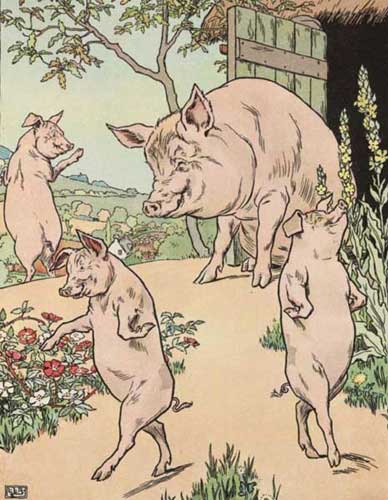
For deployment, gentle versions of stories like The Three Little Pigs, The Ugly Duckling, Rapunzel, Cinderella, or Hansel and Gretel can offer comfort, courage, and hope.
Record Your Voice Naturally
Your recording does not need to sound professional.
Actually, it should sound like you.
Your child is not looking for a perfect narrator. They are listening for the familiar rhythm of your voice: the way you pause, the way you smile while reading, the way you say their name, the way you make certain parts softer or funnier.
That familiarity is the comfort.
When recording a bedtime story, try to speak a little slower than usual. Imagine your child is already tucked in and sleepy. Keep your voice warm, steady, and gentle.
It can help to record at a quiet time when you are not rushing. If you make a mistake, you do not need to start over unless you want to. Small imperfections often make the recording feel more real.
You might even add a short personal message at the beginning:
“Hi sweetheart. It’s me. I’m going to read you a story now. I hope it helps you feel cozy and safe. I love you so much.”
Or at the end:
“Goodnight, my love. Sleep well. I’m always thinking of you.”
Those few personal words may become the part your child treasures most.
Add a Familiar Goodnight Phrase
Many families already have a special bedtime phrase.
“Sleep tight.”
“See you in my dreams.”
“I love you to the moon and back.”
“Goodnight, brave one.”
“Same moon, same stars.”
During deployment, repeating that phrase can become a small emotional anchor. It reminds your child that although the parent is far away, the relationship is still steady.
You can use the same phrase:
- Before each recorded story
- At the end of each recording
- In letters or messages home
- During video calls
- As part of the at-home bedtime routine
The phrase does not need to be clever. It just needs to be yours.
Over time, your child may connect that phrase with safety, comfort, and your presence.
Help the At-Home Parent Keep It Simple
The parent or caregiver at home has a lot to carry during deployment. A bedtime ritual should help, not add pressure.
Keep it realistic.
A good deployment bedtime routine might look like this:
- Pajamas and teeth brushing
- One short cuddle or check-in
- Play the recorded story
- Say the familiar goodnight phrase
- Lights out
That is enough.
The recording can be used on hard nights, every night, or only when the child asks for it. Some children may want to listen repeatedly. Others may only need it occasionally. Both are normal.
It can also help if the at-home parent introduces the recording warmly, rather than making it feel sad.
For example:
“Let’s listen to Daddy’s story now.”
or:
“Mommy recorded this one just for you.”
The recording becomes part of the home, not just a reminder of absence.
Give Your Child Some Choice
Deployment can make children feel powerless. Small choices can help them feel more secure.
At bedtime, you might let your child choose:
- Which recorded story to hear
- Whether to listen before or after a cuddle
- Which stuffed animal should listen too
- Whether the room should be darker or have a small light
- Which goodnight phrase to say back
These choices are small, but they give children a sense of participation. Instead of bedtime being something that happens to them, it becomes something they help shape.
For younger children, keep the choices limited:
“Do you want the pig story or the castle story tonight?”
Two options are usually enough.
Create a Small Bedtime Comfort Kit
A recorded story becomes even more powerful when paired with something physical.
A deployment bedtime comfort kit might include:
- A stuffed animal chosen by the deployed parent
- A printed photo
- A small note or drawing
- A blanket or pillowcase
- A favorite bedtime story
- A recorded story in the parent’s voice
The object does not need to be expensive. What matters is the meaning attached to it.
You might tell your child:
“This bear is going to listen to the stories with you while I’m away.”
That gives the child a concrete companion for the routine.
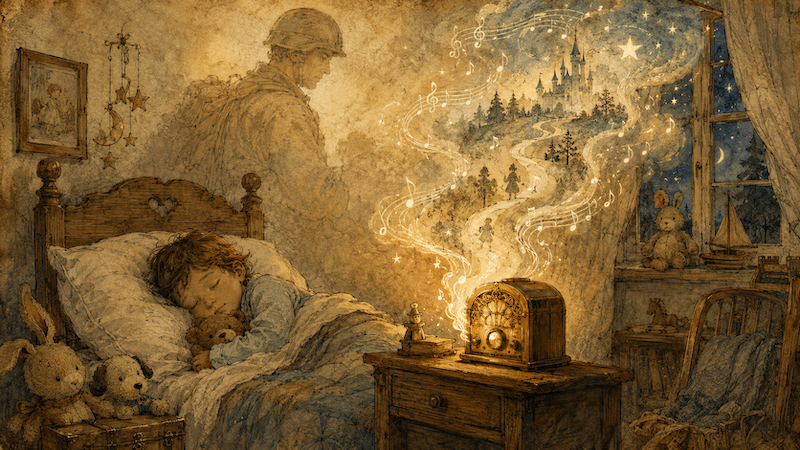
For many children, comfort comes from combining the invisible with the tangible: your voice in the recording, your photo by the bed, the same story each night, the same phrase at the end.
Use Stories to Talk About Feelings Gently
Not every bedtime conversation needs to be direct.
Sometimes children do not want to say, “I miss you.”
Sometimes they cannot explain why they feel angry, clingy, quiet, or worried.
Stories give them another way in.
A child may talk about the little pig being scared.
Or the duckling feeling alone.
Or the child in the story wanting to find their way home.
That can open a gentle conversation without forcing it.
You might ask:
“Do you think the character felt lonely there?”
or:
“What helped them feel brave?”
Then let your child answer in their own way.
The goal is not to turn bedtime into therapy. The goal is to give feelings a safe place to appear.
Keep the Ritual Going After Deployment Begins
Once deployment starts, consistency matters more than perfection.
Some nights will go smoothly. Other nights may be tearful. Some nights your child may refuse the recording because it makes them miss you more. That does not mean the ritual failed.
Children process separation in waves.
Keep offering the routine gently, without forcing it.
You can also record new stories or short messages during deployment if possible. These do not need to be long. Even a one-minute message can help:
“Hi sweetheart. I heard you had a big day today. I’m proud of you. Here’s a little bedtime story from me.”
But if regular new recordings are not possible, that is okay. A small library of stories recorded before deployment can still become a deeply comforting part of your child’s nights.
A Simple Ritual Your Child Can Return To
Here is one simple version of a deployment bedtime ritual:
Before deployment:
Choose one story together. Record it in your voice. Add a short personal goodnight message.
During deployment:
The at-home parent plays the story at bedtime. Your child listens with a favorite stuffed animal. The same goodnight phrase ends the night.
After deployment:
Keep the story. It becomes part of your family history — a reminder of how love stayed present across distance.
The ritual is simple, but its meaning is big:
“You are safe.”
“You are loved.”
“You have not been forgotten.”
“My voice is still here with you.”
Your Voice Can Become Part of Home
Deployment changes many things, but it does not have to remove your presence from bedtime.
A recorded story gives your child something they can return to whenever they need comfort. It lets your voice become part of the room: beside the lamp, near the pillow, tucked into the rhythm of sleep.
You do not need a perfect recording.
You do not need a perfect story.
You do not need to say everything.
Start with one bedtime tale. Read it slowly. Add your child’s name. Say goodnight in the way only you do.
That may be enough to turn a lonely moment into a connected one.
VoiceHearth makes this simple: choose a story, record it page by page in your own voice, listen back, re-record any section if you like, and turn it into a shareable audio file your child can hear at bedtime.
Because sometimes the most comforting thing a child can hear is not a new story.
It is a familiar voice saying:
“I’m here. I love you. Goodnight.”