
Why Fairy Tales Have Survived for Thousands of Years
Once Upon a Time… and Still Today
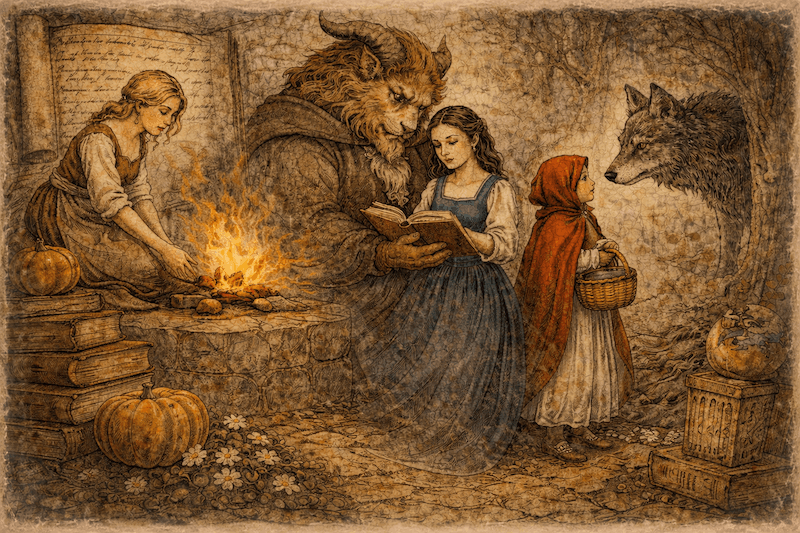
Imagine a story told around a Bronze Age fire in what is now Europe—perhaps about a clever hero outwitting a powerful being, or a beauty who transforms a monstrous suitor. Fast-forward thousands of years: that same core tale appears in modern books, films, and bedtime routines worldwide. Researchers using statistical methods similar to those for tracing biological evolution have dated motifs in tales like Beauty and the Beast and Rumpelstiltskin to 4,000–6,000 years ago, predating written languages in many cases.
Fairy tales aren't just old—they're astonishingly persistent. Empires rise and fall, technologies transform society, yet these simple, magical narratives refuse to fade. What makes them so enduring? Let's explore the key reasons, drawing from folklore studies, anthropology, and depth psychology.
Born in Oral Tradition: Stories That Evolve to Survive
Before books, printing presses, or screens, stories lived in voices. Passed from parent to child, neighbor to neighbor, they traveled across continents without ever being written down.
This oral tradition was their first superpower. Storytellers naturally adapted tales to fit local customs, languages, and audiences—swapping a wolf for a tiger, a glass slipper for a golden sandal, or a fairy godmother for helpful animals. Only the strongest, most memorable versions survived repeated tellings. The ones that were too complicated, too boring, or too culturally specific faded away.
Scholars have shown that some tales persisted for millennia precisely because they were retold faithfully enough to remain recognizable, yet flexible enough to adapt. They weren't frozen artifacts; they were living things, breathing and changing while keeping their emotional core intact.
Minimally Counterintuitive: Just Strange Enough to Stick
Why do these stories lodge in our minds so deeply? Successful fairy tales mix everyday logic with a dash of the impossible:
- A pumpkin turns into a carriage (but only until midnight).
- A frog becomes a prince with a kiss.
- A house made of candy lures children (but it's owned by a witch).
This blend is perfect for human memory: familiar enough to understand quickly, strange enough to be unforgettable. Too ordinary, and it bores; too bizarre, and it confuses. The sweet spot—magic grounded in relatable human struggles—helps tales spread and endure across generations and cultures.
Universal Themes That Mirror the Human Experience
At their heart, fairy tales address the same questions humans have asked forever:
- How do I survive danger and cruelty?
- What happens when someone I trust betrays me?
- Can goodness win against overwhelming evil?
- How do I grow up, find my place, and transform hardship into strength?
Themes like jealousy, fear of abandonment, coming-of-age trials, and redemption through love or cleverness appear in variants from ancient India to medieval Europe to indigenous African stories.
These aren't dated morals; they're timeless maps of the psyche. They connect us to ancestors who told the same stories by firelight, and they prepare our children for a world that's changed in details but not in its deepest challenges.
The Power of Symbolism: Why the Stories Speak to Our Deepest Self
One of the most profound reasons fairy tales endure is their rich, layered symbolism. The elements aren't random—they carry deeper meanings that resonate on an unconscious level.
Swiss psychologist Carl Jung, founder of analytical psychology, saw fairy tales as one of the clearest windows into the human psyche. He argued that beneath our personal experiences lies a deeper layer he called the collective unconscious—a shared reservoir of inherited psychic patterns common to all humanity.
These patterns manifest as archetypes: universal, primordial images and motifs like the Hero, the Shadow (the dark side we repress), the Wise Old Man/Woman, the Anima/Animus (the inner opposite gender), the Child (potential and rebirth), and the Self (wholeness).
Jung described fairy tales as "the purest and simplest expression of collective unconscious psychic processes." Unlike myths or legends, which often carry heavy cultural overlays, fairy tales strip away much conscious elaboration. This lets the archetypes appear in their "barest and most concise form," making the stories powerful vehicles for symbolic meaning.
Characters, objects, and events aren't literal—they symbolize inner psychological realities:
- The wicked stepmother often represents the devouring or rejecting aspect of the mother archetype.
- The dark forest stands for the unknown depths of the unconscious, a place of danger but also transformation.
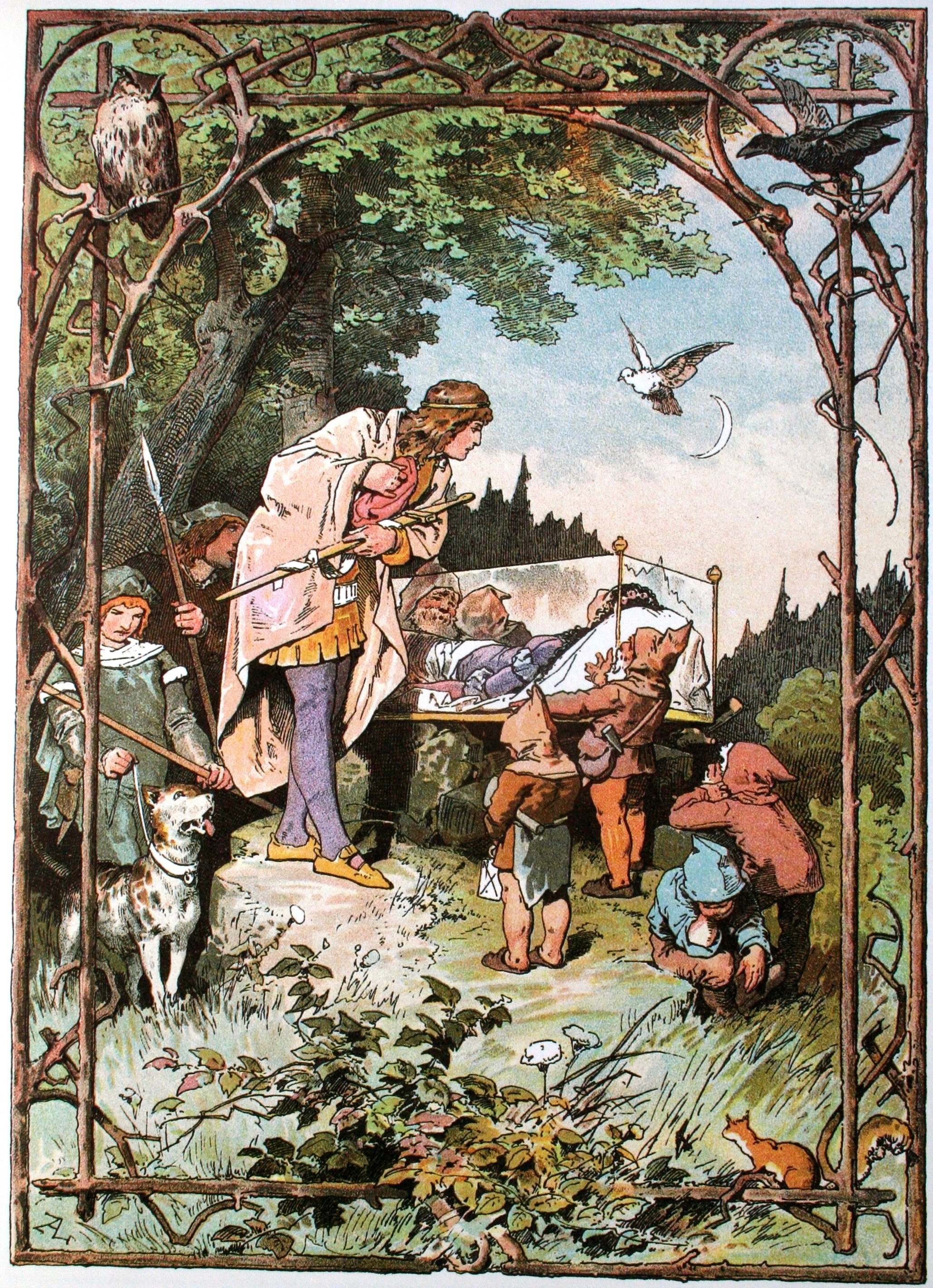
- The glass coffin or long sleep symbolizes a liminal state—death-like stagnation followed by rebirth.
- The hero's journey through trials mirrors the process of individuation: becoming a whole, integrated self by confronting and integrating unconscious forces.
When we hear or tell these tales, the symbols activate archetypal energies within us. They allow safe exploration of fears, desires, conflicts, and growth potentials. Retelling them "causes these processes to come alive again and be recollected," reconnecting conscious mind with deeper layers of the psyche.
This symbolic depth explains why fairy tales feel profoundly true and healing, even to adults—they speak directly to parts of us that logic alone can't reach.
They Adapt and Get Reinvented
Fairy tales don't survive by staying the same—they thrive by changing. Each era adds its layer: Victorian propriety, 20th-century animation, 21st-century empowerment. Because the skeleton remains flexible and the symbols universal, the stories stay relevant.
They Offer Escape, Recovery, and Consolation
J.R.R. Tolkien described three gifts fairy tales give: Recovery (seeing the world freshly), Escape (relief from ordinary struggles), and Consolation (the "eucatastrophe," where good triumphs against impossible odds).
In a harsh or uncertain world, that promise isn't escapism—it's emotional medicine. It reassures us that justice can prevail, kindness matters, and transformation is possible.
The Chain Continues With Every Telling
Fairy tales have outlasted countless cultural shifts because they entertain while quietly teaching survival, empathy, resilience, hope—and through their symbolism, they guide us toward wholeness.
The next time you share one of these ancient tales, remember: you're not just reading words. You're joining a chain that stretches back thousands of years—and helping it stretch forward.
If you're a parent or grandparent who loves preserving these stories in your own voice, platforms like VoiceHearth make it easy to record them for your family. Your version becomes part of the living tradition, ready to delight, comfort, and subtly awaken deeper layers in the next generation.
After all, the best fairy tales aren't the ones in books—they're the ones told with love, passed heart to heart.
Start Recording Stories For Your Loved Ones
Record ‘Snow White and the Seven Dwarfs’ on VoiceHearth →